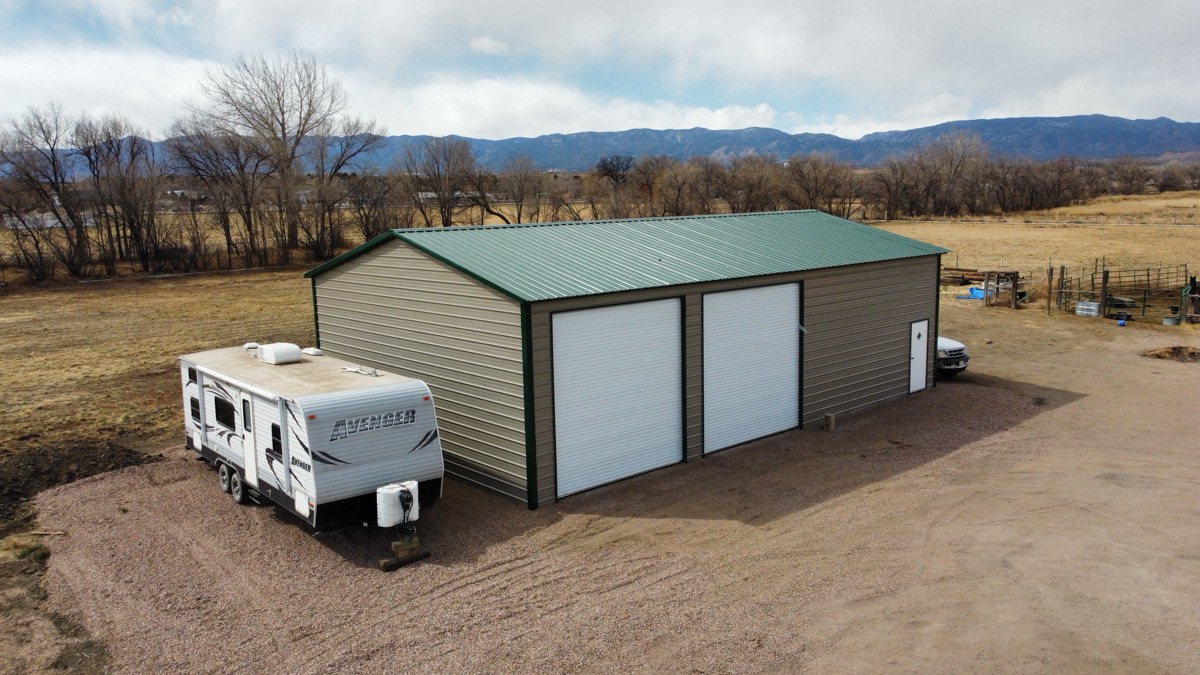

Written by Rocky Mountain Metal · Reviewed by Micah Hostetler, Owner · Based in Penrose, CO, serving Colorado.
Measure your largest machine with its widest implement attached, add working clearance, then add the next machine you'll buy. Expect doors about two feet bigger than that machine each way and 14- to 16-foot sidewalls for cab tractors with loaders.
Key takeaways
- Measure the biggest machine with its implement, not the tractor alone.
- Doors: about two feet of clearance each way; 14×14 and 16×14 are common for tractors with loaders.
- Sidewall height of 14 to 16 feet; more for combines, semis or a future lift.
- Depth: machine length plus hitch plus room to walk around.
- Plan for the equipment you'll own in ten years.
What should I measure?
For each machine, write down:
- Length with the longest implement attached. A tractor with a rear blade or a baler is much longer than the tractor.
- Width at the widest point: dual wheels, a loader bucket, a mower deck, a disk folded for transport.
- Height to the top of the cab, exhaust stack, loader arms in transport position, or a folded implement.
- Turning room, especially for anything you'll back in with a trailer.
Then add about two feet each side and above for doors, three to four feet of walking room beside parked machines, and the equipment you plan to buy.
What size doors do I need?
| Equipment | Typical door |
|---|---|
| ATVs, UTVs, mowers | 10×10 |
| Compact tractor with loader | 12×12 |
| Utility tractor with cab and loader | 14×14 |
| Large tractor, round baler, dually with gooseneck | 16×14 to 16×16 |
| Combine, semi | Engineered wide, tall openings |
In a steel building, door openings are framed into the building when it's ordered, and wide openings need framing engineered for the span and the wind. Put the biggest door where the biggest machine lives and use smaller doors elsewhere. Roll-up doors are common on equipment buildings; insulated sectional doors seal better for a heated shop. See how much does a metal building cost? for what moves the quote.
How tall should the sidewalls be?
Fourteen feet clears most cab tractors with the loader down; sixteen covers taller machines and gives you flexibility. Sidewall height is chosen when the building is ordered and can't practically be raised later, so buy the height now.
Which layout works best?
- Single-row bays, one machine per bay, from an open front or a row of doors. No shuffling, easy access.
- Drive-through, doors on both ends. Pull in one side and out the other, and never back up a trailer.
- Deep building with an aisle. An efficient footprint, but you'll move three things to reach the fourth.
An open-front machine shed, closed on three sides with one side open, is economical covered storage for implements and hay equipment that don't need to be locked up. Enclose a bay or two at one end for the tractor, tools and anything you want secure.
What floor does an equipment building need?
The building is anchored to the foundation its engineered drawings call for. Inside that, compacted road base works for implements and many tractors, while concrete suits bays where you'll service equipment, park anything that drips, or use a jack. See how to prepare your site.
What Colorado details matter?
- Face the open side or main doors away from the prevailing wind and out of the roof's snow-slide line.
- Snow load on a wide equipment building is real, and the frame is engineered to your site's loads. See what snow load does my building need?
- Power for block heaters, battery tenders and lights is worth the trench. See getting power to a detached building.
- Ag exemptions often apply to machine sheds on agricultural land, though requirements vary by county.
What footprints are common?
A 30×40 handles a compact tractor, a UTV and implements. A 40×60 covers a utility tractor with loader, a truck and trailer and a shop bay. Ranch operations with larger equipment move wider with taller sidewalls.
Rocky Mountain Metal sells steel-framed metal buildings only. We go over your equipment list with you at the site visit, plan the building, and order it from 1st Choice Metal Buildings and Carports. The manufacturer's crew from Texas installs it, and we oversee the project. See agricultural buildings, small warehouses and our service area, then request a free quote.
Frequently asked questions
How tall should a tractor shed be?
Fourteen-foot sidewalls for most cab tractors with loaders; sixteen if anything taller is in your future.
Is an open-front machine shed worth it versus a closed building?
For implements that don't need security or heat, yes. It's economical covered storage. Enclose the bays that need it.
Can I add doors later?
Sometimes, but adding a large opening to a steel building after the fact means reframing that wall section, and it should be checked against the building's engineering. Plan the doors you'll want now.
Should I store equipment and hay in the same building?
Keep fuel-carrying equipment away from the hay stack, ideally in separate bays or buildings. See how to store hay.